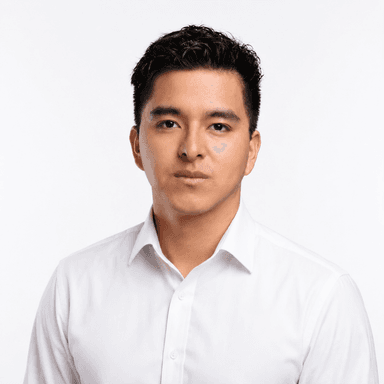
Hector Diaz
Building
Born in Luya Viejo, Peru, I dropped out of the Pontifical Catholic University of Peru, where I was majoring in economics. I am a Magnificent Fellowship recipient and an Emergent Ventures grant winner. Previously, I trained the first neural machine translation (NMT) model for the Spanish-Awajún language pair and achieved state-of-the-art results in BOUQuET (Dataset, Benchmark, and Open Initiative for Universal Quality Evaluation in Translation), published by Meta. Evaluation code and results here. During high school, I represented my country in the Sakura Science High School Program, organized by the Japan Science and Technology Agency. Later, I was awarded a full scholarship to study economics at the top university in Peru, the Pontifical Catholic University of Peru.
I lead Airvoy, an eSIM startup aiming to become the world's first fully free eSIM marketplace.
In my spare time, I lead a project to find the Rosetta Stone for the Andean Quipus. We are using generative AI to transcribe colonial-era documents, searching for the lost written transcriptions that could finally allow us to decode the narrative and historical data stored in the quipus.
Additionally, I am writing a book titled Architects, which features individuals building asteroid mining companies, doing postraining at frontier AI labs, country presidents, people tracking UFOs, and more. If you know someone who should be featured in this book, please reach out.
Past
Gaia gathered over half a million parallel sentences for 40+ very low resource languages, in collaboration with Wikimedia Malaysia, the Peruvian Government, the Pontifical Catholic University of Peru, and other organizations. Watch demo
I was weatured in a book of 16 inspiring stories published by the Peruvian government, ironically, shortly after I dropped out of college.
I was invited to speak twice at the presidential palace, once when the government scholarship program for university students doubled from 5,000 to 10,000 per year, and again when it doubled from 10,000 to 20,000.